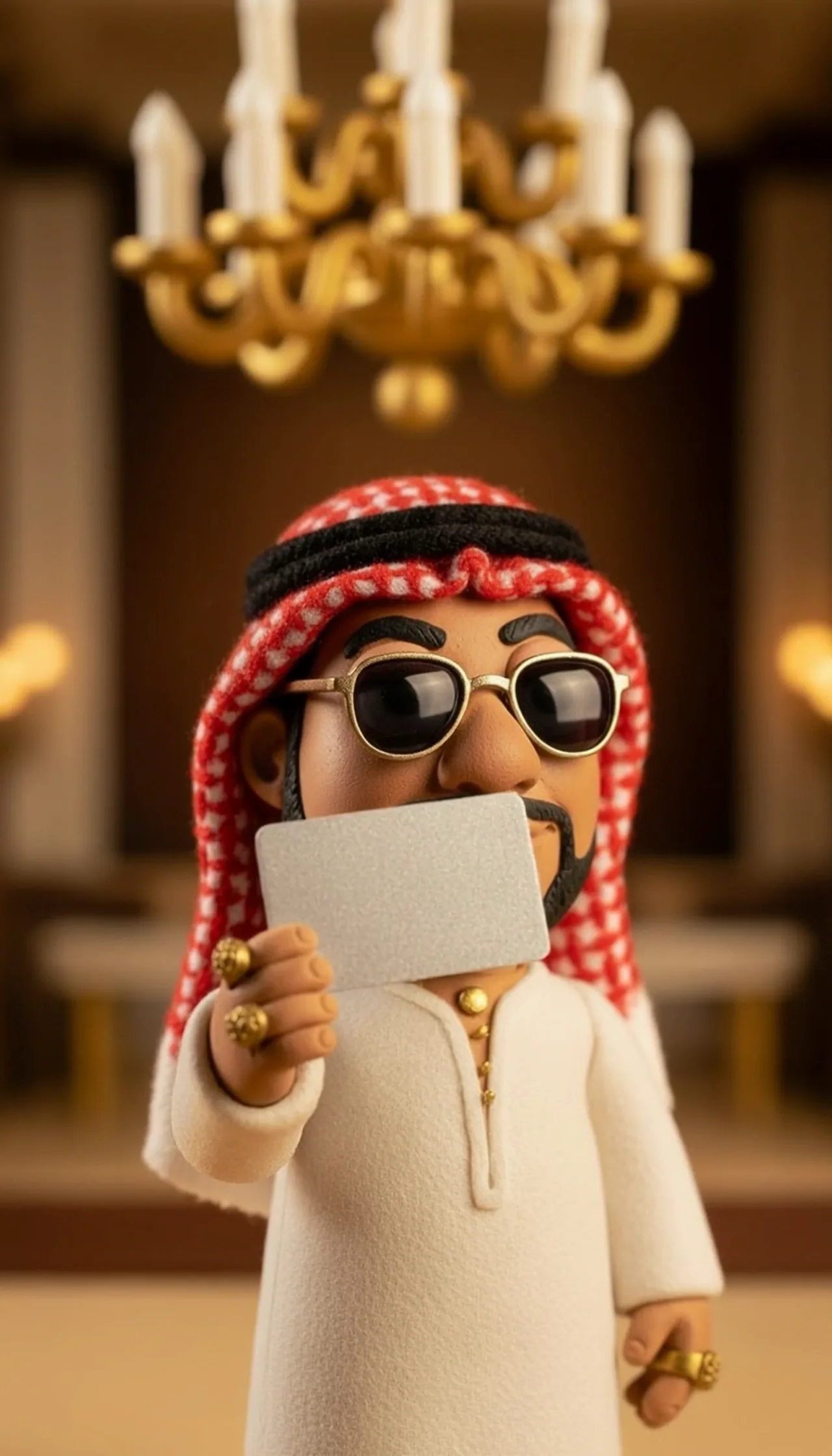
In 2017 a man calling himself Prince Khalid Bin Al-Saud negotiated to buy into one of Miami Beach's best-known hotels. He had diplomatic plates, bodyguards and a company that took money from investors on three continents. He was Anthony Gignac. This page tells the story from the court record and reporting, then walks through the checks a KYB analyst would run on a counterparty like him.
What really happened
Who he was
Gignac was born in Colombia. The BBC reported that he was adopted by a family in Michigan at the age of seven (CNBC gives six), and that by 17 he had begun presenting himself as a Saudi royal. The Justice Department's sentencing release lists his aliases: "Khaled Al-Saud", "Khalid Al-Saud", "Khalid Bin Al-Saud", "Khalid Bin Sultan Al-Saud" and "Sultan Bin Khalid Al Saud". According to the court record cited in that release, between 1988 and 2019 he was arrested or convicted eleven different times for prince-related schemes.
One of those earlier schemes is the source of the film's credit card. The Miami Herald reported that in 1994, while out on bail, Gignac went to an American Express office in Coral Gables and asked for a replacement Platinum card, which the paper said carried a $200 million credit line at the time. Staff doubted him when he could not give the real prince's date of birth, then issued it anyway after he shouted at them.
The scheme that ended it
The Justice Department says that from as early as May 2015 Gignac claimed to be Prince Khalid Bin Al-Saud. To support the persona he bought fake diplomatic plates, a fake Diplomatic Security Service badge for his bodyguards and business cards calling himself "Prince" or "Sultan".
With a co-conspirator he formed an investment company, Marden Williams International LLC ("MWI"). Through MWI he claimed access to deals around the world: a pharmaceutical company in Ireland, a casino in Malta, luxury hotels, a jet-fuel trading platform in the Middle East, and a stake in Saudi Aramco that investors could buy from him. He forged documents from high-ranking Saudi officials to verify his royal status, his wealth and the Aramco stake. The Miami Herald, reporting on the indictment, said he showed potential investors documents from a "Bank of Dubai" showing $600 million available to him.
Investors in the United States, Canada, the United Kingdom, Switzerland and Hong Kong sent him close to $8 million. Prosecutors said none of it was invested; it paid for Ferraris, Rolls-Royces, yachts, jewelry, private jets and a two-bedroom property on Fisher Island. On November 19, 2017 he flew into JFK from London on a passport in another person's name.
The hotel and the pork
Vanity Fair reported that Gignac flew to Aspen on the private jet of billionaire Jeffrey Soffer, who hoped to sell him 30 percent of the Fontainebleau hotel in Miami Beach for $440 million. The BBC, citing the Miami Herald, reported that the hotel's owners grew suspicious, partly because he ate pork, which a devout Muslim prince would not; Vanity Fair specifies that he ordered prosciutto. They hired a private security firm to investigate, and that work led to the federal case.
The film says the owner bought him $50,000 of jewelry. The sources differ: the Miami Herald, quoting the indictment, says Gignac's associate demanded that a company identified only as "Company T.A." buy Gignac a gift worth more than $50,000 "because the 'sultan's' honor had been questioned", and that the gift was bought and delivered the same day. The indictment excerpt does not name the company.
The sentence
Gignac pleaded guilty to impersonating a foreign diplomat or official (18 U.S.C. § 915), aggravated identity theft, wire fraud and conspiracy to commit wire fraud (Case No. 17-CR-20891, Southern District of Florida). On May 31, 2019, U.S. District Judge Cecilia M. Altonaga sentenced him to 224 months, a little over 18 years and 8 months. The film rounds this to "eighteen years".
The film
The Prince Who Ordered the Pork is a 50-second claymation dramatization posted on September 29, 2026. Characters are clay figures, scenes are staged, and the dinner is condensed from reporting.
Narration transcript
A Saudi prince came to Miami to buy a famous hotel. Then he ordered dinner.
Prince Khalid bin Al Saud. Gold rings. A credit card with a two-hundred-million-dollar limit.
He wanted a four-hundred-forty-million-dollar stake in the Fontainebleau.
Its billionaire owner flew him on his private jet,
and bought him fifty thousand dollars of jewelry.
Then, one night, at dinner, the billionaire watched his guest order.
He ordered the pork.
A Muslim prince. Ordering pork. The billionaire hired investigators.
The prince was Anthony Gignac, from Michigan. He had been playing a Saudi prince for thirty years.
This time, he got eighteen years.
The jet was real. The jewelry was real. The prince wasn't.
Sweat AI checks who's really behind the account.
Watch what the prince orders.
How KYB would have caught it
Every part of the persona was a claim about identity, ownership or wealth that could be tested against a source Gignac did not control.
| Red flag | What a KYB or fraud analyst checks | Evidence that would have surfaced |
|---|---|---|
| An investment LLC with a royal principal and no track record | State registry filing: formation date, registered agent, officers, filing history; compare against the claimed global deal flow | A recently formed LLC with no operating history, set against claims of access to Aramco, a Malta casino and an Irish drug maker |
| Principal claims to be a member of a royal family | Screen as a politically exposed person; match name, date of birth and nationality to the identity document; ask for a passport, not business cards | No PEP match for the claimed identity with his date of birth; an identity document that does not support the royal name. In 1994 he could not give the real prince's date of birth |
| Diplomatic status used as proof of standing | Verify diplomatic status with the accrediting authority rather than accepting plates, badges or letters | Plates and a Diplomatic Security Service badge that official records do not back; prosecutors said both were fake |
| Letters from senior officials and a bank letter showing $600 million | Confirm documents directly with the issuer through an independently sourced contact; check source of funds and source of wealth | Documents the named issuers would not confirm; prosecutors said the Saudi letters were forged |
| The deal pays the principal first | Map the money flow the application describes: who receives investor funds, where they are held, and what they buy | Investor funds landing with the principal and spent on cars, yachts and property rather than any venture |
| Demands for gifts to repair "honor" | Treat payments or gifts demanded as a condition of doing business as an escalation trigger; record and escalate | A documented demand for a gift worth more than $50,000, which the indictment describes |
| Real name has a long public history | Adverse media screening on the true name and known aliases, once the identity document gives the true name | Decades of reporting on "prince" frauds and, per the court record, eleven prior arrests or convictions |
Each check is an ordinary KYB step on an entity and its ultimate beneficial owner. The persona survived because counterparties verified the setting (the jet, the plates, the penthouse) and never the man.
Related terms
- Politically exposed person (PEP)
- Adverse media screening
- Ultimate beneficial owner
- Source of funds vs. source of wealth
- Guide: Shell company red flags in business onboarding
When the application looks like this
Most applications with a glossy principal and a thin company are not frauds, and telling them apart is careful work. Sweat AI is an AI-native BPO for banks and fintechs, and this is the work our analysts do on onboarding and fraud queues, nights and weekends included. We prepare the review, the evidence and a recommendation; your team makes the decision. See how a finished file reads in our sample KYB review, or read how we run business investigations.
Questions
Who was the fake Saudi prince?
Anthony Gignac, who was born in Colombia and adopted by a family in Michigan. He posed as Prince Khalid Bin Al-Saud and other royal names. In May 2019 a federal judge in Miami sentenced him to 224 months in prison after he pleaded guilty to impersonating a foreign official, aggravated identity theft, wire fraud and wire fraud conspiracy.
How much money did Anthony Gignac take?
The Justice Department said investors in the United States, Canada, the United Kingdom, Switzerland and Hong Kong sent him close to $8 million, and that dozens of investors lost more than $8 million.
How was he caught?
The BBC, citing the Miami Herald, reported that the owners of a Miami hotel he was negotiating to invest in grew suspicious, partly because he ate pork, and hired a private security firm to investigate him. That work led to a federal investigation by the State Department's Diplomatic Security Service.
Was the $200 million American Express card part of the Miami hotel deal?
No. The Miami Herald reported that Gignac obtained an American Express Platinum card, which it said then carried a $200 million credit line, in Coral Gables in 1994, more than twenty years before the hotel negotiations. The film compresses the two episodes.
Sources
- USAO Southern District of Florida: South Florida resident sentenced to more than eighteen years in prison for impersonating a member of the Saudi royal family (May 31, 2019), accessed 2026-09-30
- BBC News: Fake Saudi prince Anthony Gignac jailed for $8m fraud (June 1, 2019), accessed 2026-09-30
- Vanity Fair: How the fake Saudi prince Anthony Gignac was exposed (October 2018), accessed 2026-09-30
- Miami Herald: He's called himself a prince for decades, but the royal treatment has ended in Miami (January 11, 2018), archived copy, accessed 2026-09-30
- CNBC: How a fake Saudi prince conned investors out of nearly $8 million (January 6, 2020), archived copy, accessed 2026-09-30